
Why cooling is decisive
Servers turn almost all the power they use into heat that must be moved out of the hall. Cooling efficiency is measured by PUE (Power Usage Effectiveness): the closer to one, the smaller the share of energy spent on anything other than computing itself. Finland reaches low PUE figures because the outside air is cold for much of the year.
Free cooling and waste-heat recovery
In free cooling the hall is cooled with outside air without constant compressor cooling. In Finland's climate this covers a large part of the year. The waste heat produced can be recovered and fed into the district heating network — both an environmental act and part of the project's economics.
Hot and cold aisles
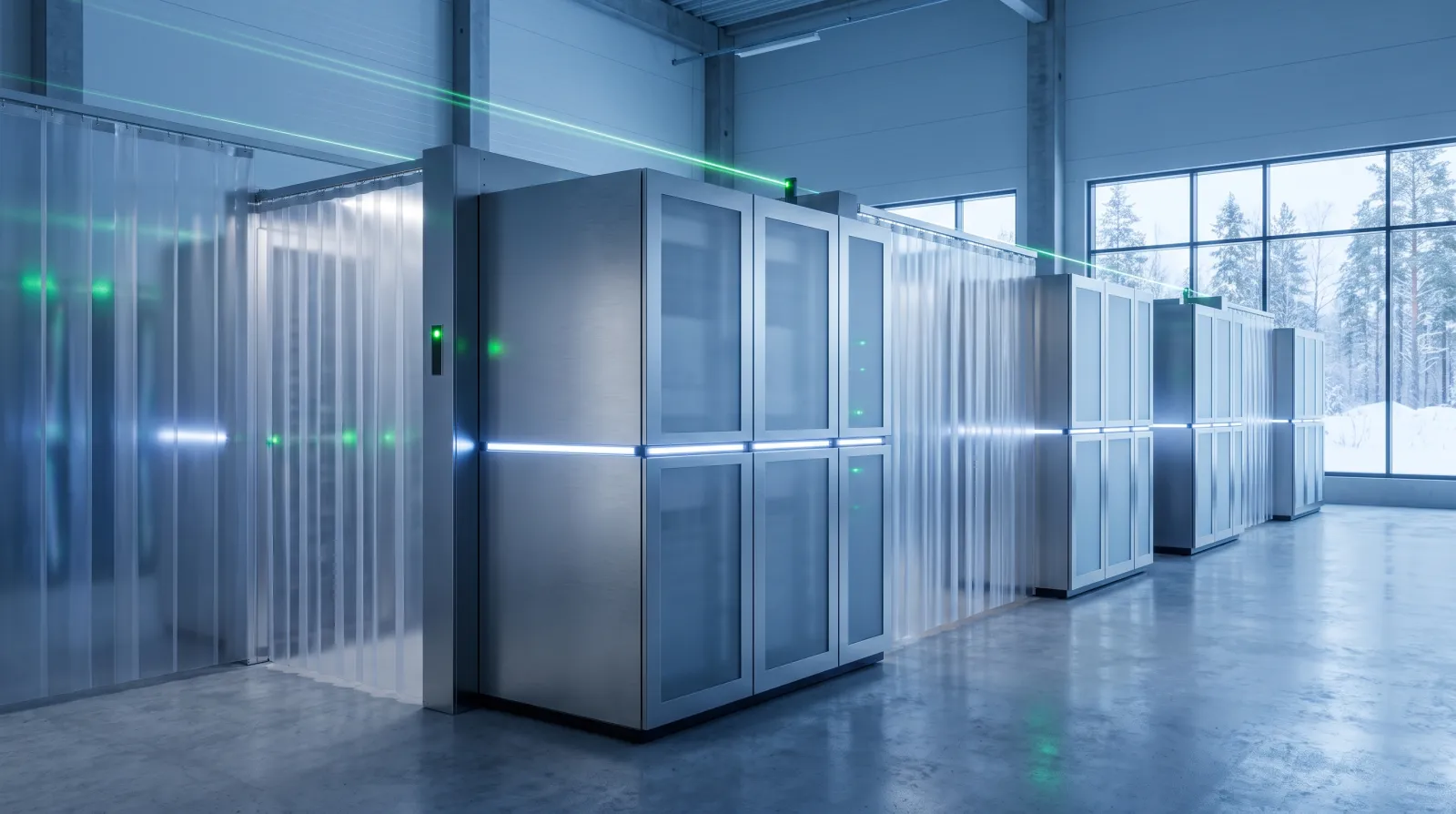
Inside the hall airflow is directed so that cold air reaches the front of the racks and hot air leaves the back. Separating hot and cold aisles with containment prevents the airflows from mixing and improves efficiency. Building the containment, solid walls and penetrations airtight is construction work.
What we do — and what we don't
To be honest: Raslak Works does not design or install cooling machines, piping or automation — those are the work of HVAC and specialist contractors. Our part is the building around the cooling: the spaces the machines and aisles require, raised floors, airtight containment, fire stops at penetrations and finishing. This work is fitted to the schedule of the technical installations.
Schedule and commissioning
Cooling is tested at commissioning under full load, and the construction shortcomings found in inspections — containment tightness, markings, finishing — are corrected from the snagging list. Fast, clean correction before handover is a local contractor's strength.